




Completing the hydrogen circle
Hydrogen Circle plays a central role in the transition toward a low-carbon economy, offering a clean alternative to fossil fuels across multiple sectors including transportation, industry, and energy storage.
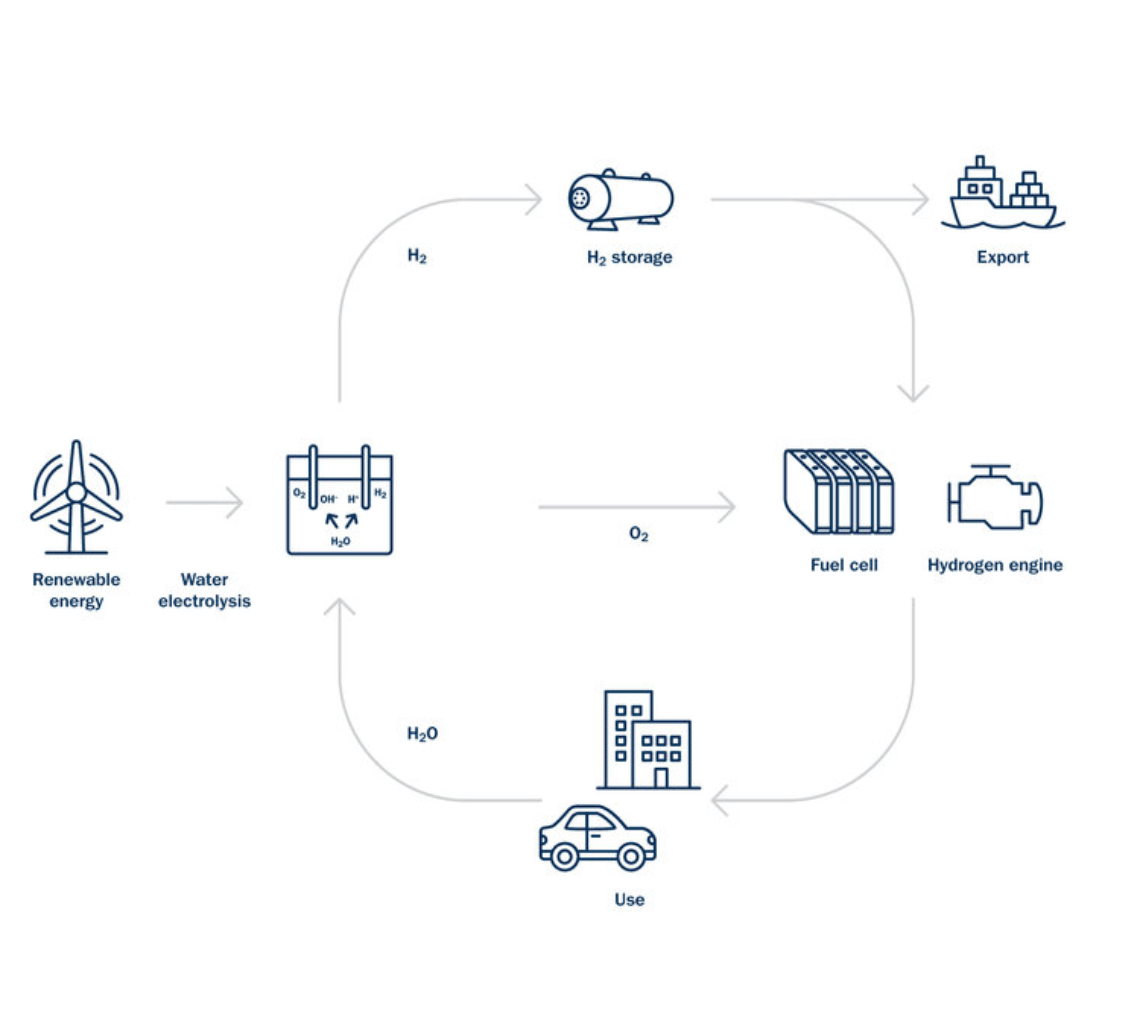
At the heart of the hydrogen circle is green hydrogen, produced through electrolysis powered by renewable energy sources such as wind or solar. This process splits water into hydrogen and oxygen without emitting carbon dioxide, making it environmentally friendly. Unlike traditional low-temperature electrolysis, SOECs benefit from thermal energy, which can be sourced from industrial waste heat or renewable sources like concentrated solar power, making SOECs the most efficient technology for clean hydrogen production in such cases.
This makes SOECs ideal for integration into energy-intensive sectors aiming to decarbonize operations. Once produced, hydrogen can be stored in tanks or pipelines and transported to where it’s needed. Hydrogen is versatile in its applications. It can be used in fuel cells to generate electricity for vehicles, buildings, or grid support. In industrial processes, it serves as a clean feedstock for steel production, ammonia synthesis, and refining. When hydrogen is consumed in fuel cells, the only byproduct is water—completing the circle without harmful emissions.